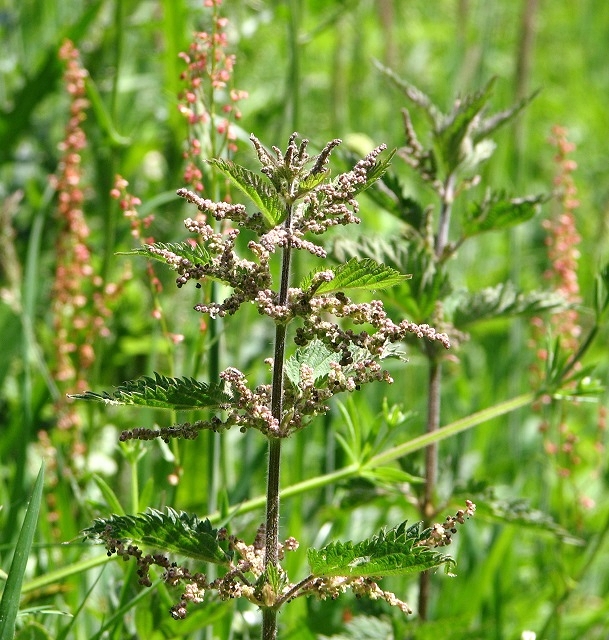
 Urtica dioica
Stinging Nettle
Urtica dioica
Field Identification
- Opposite, heart-shaped leaves with strongly serrated edges
- Visible stinging hairs (trichomes) on stems and leaf undersides
- Grows 2–7 feet tall in nitrogen-rich soil near streams, edges, and disturbed ground
- Small greenish flowers in drooping clusters at leaf junctions
- Square-ish stem cross-section
How to Prepare
Key rule: Cooking or drying destroys the sting. Never eat raw — the trichomes inject histamine and formic acid on contact.
- Harvest with protection. Use leaves or cloth to grip stems. Pick the top 4–6 leaves from each plant (youngest and most nutritious). Avoid plants that have already flowered — older leaves contain gritty calcium carbonate crystite particles called cystoliths that can irritate the urinary tract.
- Boil for nettle soup. Bring water to a rolling boil. Drop nettle leaves in for at least 2 minutes — this completely neutralizes the stinging compounds. Drain and eat, or drink the cooking water as a nutrient-rich broth. One handful of nettles boiled in a camp cup is a solid meal's worth of iron, calcium, and vitamins A and C.
- Steam in a leaf wrap. If you don't have a pot, wrap nettles tightly in large non-toxic leaves (burdock works well) and place on hot coals for 5–8 minutes. The steam cooks them inside the wrap.
- Dry for tea. Spread leaves on a flat rock in sun. Once fully dried and crumbly (several hours), they can be crumbled into hot water for tea. Dried nettles no longer sting.
Nutritional powerhouse: nettle is one of the best wild sources of protein, iron, and vitamin C available in the Carpathians. Prioritize this plant — it should be a daily staple.
Caution
Handle with protection — the sting causes red welts that last 30 minutes to several hours. If stung, dock leaf (Rumex obtusifolius) rubbed on the area provides mild relief. Do not confuse with dead-nettle (Lamium species) which looks similar but does not sting and is also edible.
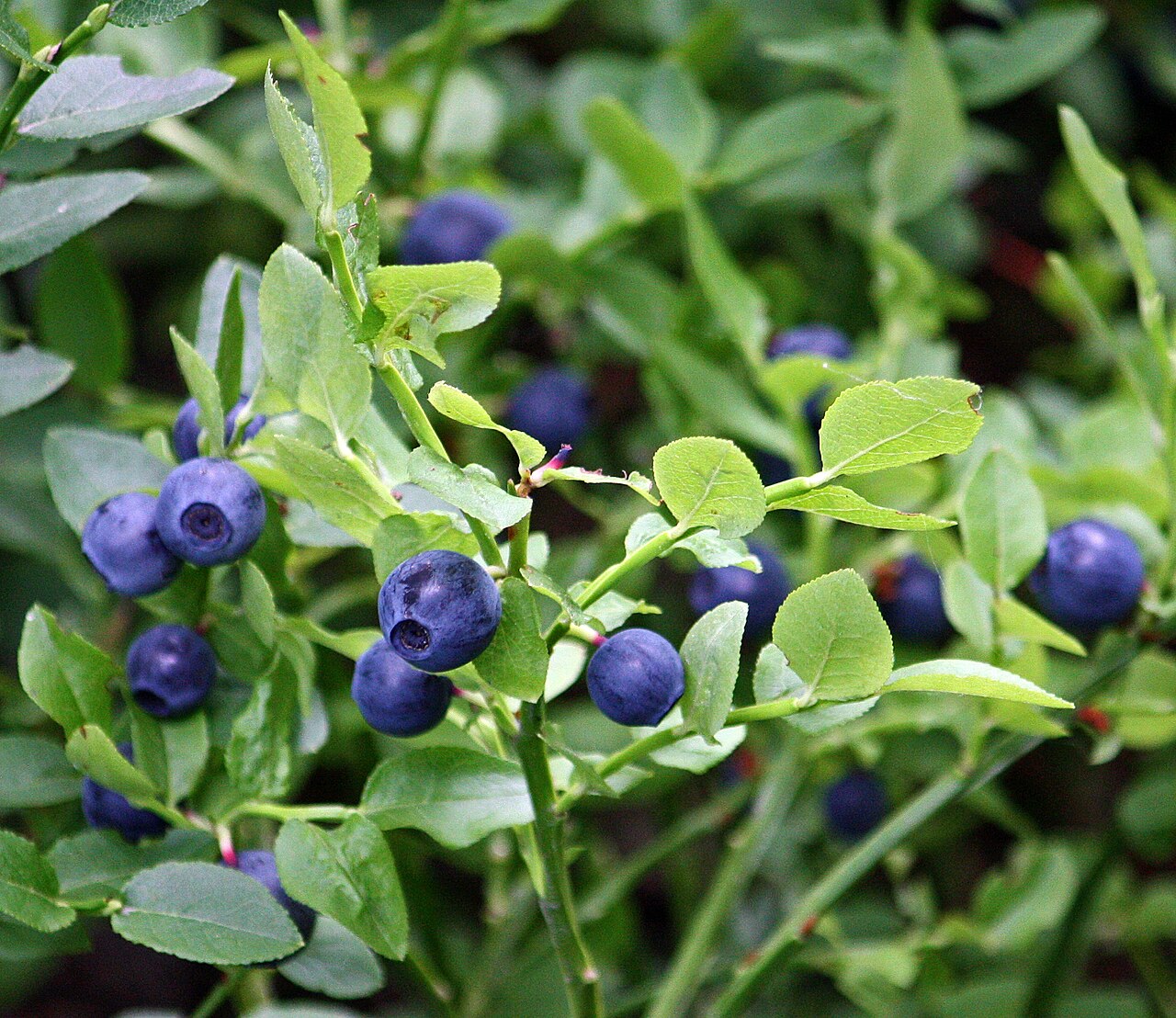 Vaccinium myrtillus
Bilberry
Vaccinium myrtillus
Field Identification
- Low shrub, 6–24 inches tall, with bright green oval leaves with finely toothed edges
- Dark blue-black berries, smaller than cultivated blueberries, with deep red-purple flesh that stains fingers
- Grows on acidic soils in open forest, heathland, and mountain slopes
- Angular green stems (not rounded)
How to Prepare
Eat fresh — no preparation needed. Bilberries are safe to eat raw right off the bush.
- Graze while walking. Pop them directly into your mouth. They're tart-sweet and an excellent quick energy source. A handful provides meaningful calories and vitamin C.
- Collect and mash for a calorie-dense paste. Gather a cup's worth, mash between clean rocks, and eat the pulp. Easier to consume in volume when mashed.
- Dry for later. Spread on a flat rock in direct sun. Dried bilberries are calorie-dense and keep for days. Good insurance food for a low-forage day.
- Brew as tea. A handful of fresh or dried berries steeped in hot water makes a vitamin-rich, mildly astringent tea that also helps with diarrhea — useful in a survival situation where waterborne illness is a risk.
Bilberries ripen June through August in the Carpathians. If you find a good patch, remember the location — bushes fruit reliably in the same spot year after year.
Caution
Do not confuse with bog bilberry (Vaccinium uliginosum), which has duller blue-grey berries, more rounded leaves, and a slightly mealy texture. Bog bilberry is also edible but in very large quantities may cause mild dizziness and headaches. Both are safe — but true bilberry is far more nutritious and better-tasting.
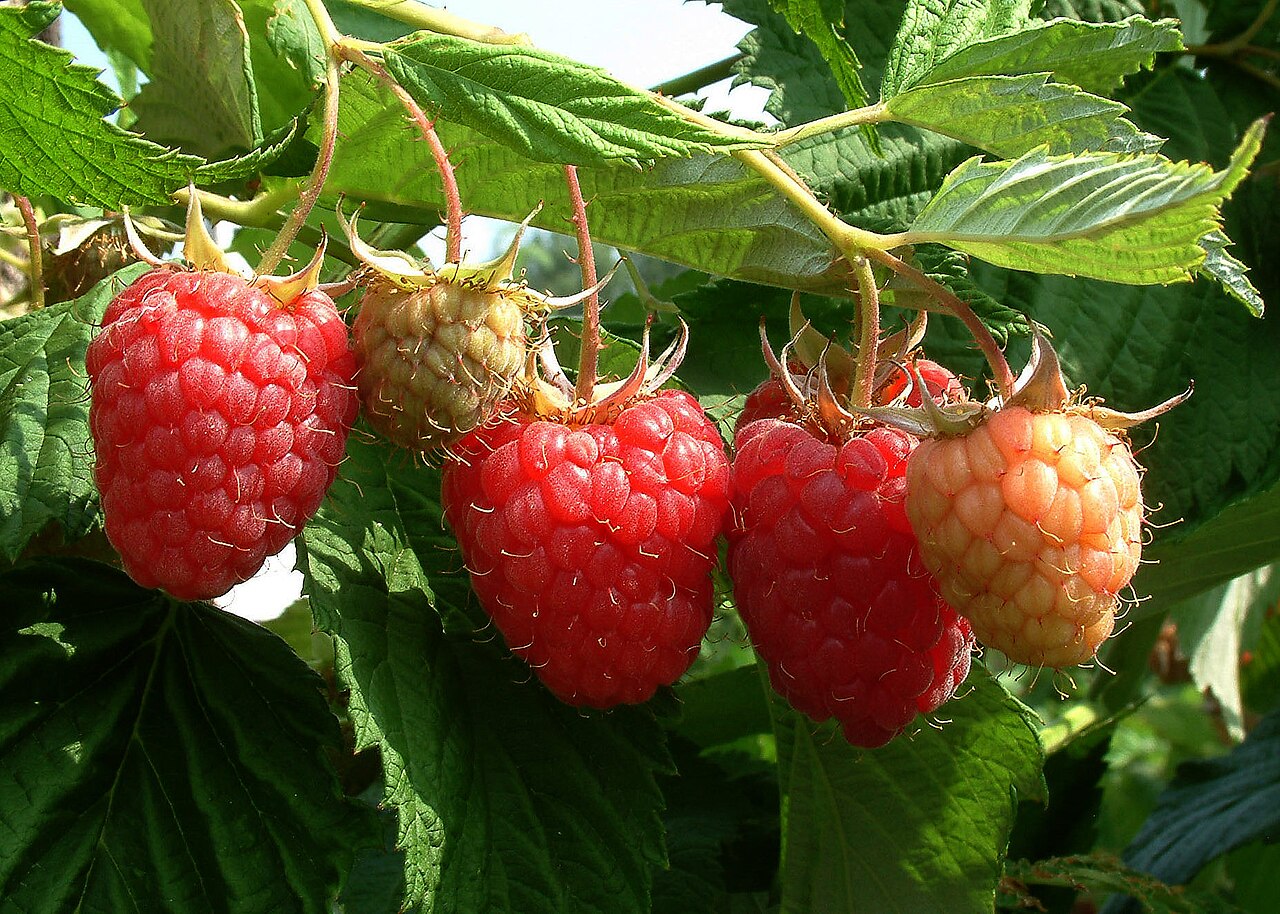 Rubus idaeus
Wild Raspberry
Rubus idaeus
Field Identification
- Arching thorny canes, 3–6 feet tall, often forming dense thickets
- Compound leaves with 3–5 leaflets, dark green above, white-felted underneath
- Red aggregate fruit that separates from the receptacle when picked (leaving a hollow core — this is how you know it's a raspberry, not a blackberry)
- Found on forest edges, clearings, and disturbed ground at all elevations
How to Prepare
Eat fresh — no preparation needed.
- Eat immediately. Wild raspberries are smaller and more intensely flavored than cultivated varieties. Eat as many as you can find — they're pure energy.
- Leaf tea. Raspberry leaves make an excellent tea. Pick young leaves, bruise them slightly, and steep in hot water for 5–10 minutes. Mildly astringent, helps settle the stomach. This tea has been used for centuries in folk medicine across Eastern Europe.
- Mash for trail food. Mash berries into a paste and spread on flat rocks to sun-dry into a fruit leather. Takes 6–8 hours of strong sun but produces a calorie-dense, portable food.
Wild raspberry canes fruit from June through August. Second-year canes bear fruit; first-year canes are just green shoots. Look for the older, woodier canes with fruit.
Caution
No dangerous lookalikes. All Rubus species (raspberries, blackberries, dewberries) with aggregate fruit are edible. The hollow core when picked is your confirmation it's a raspberry. Watch for thorns when harvesting.
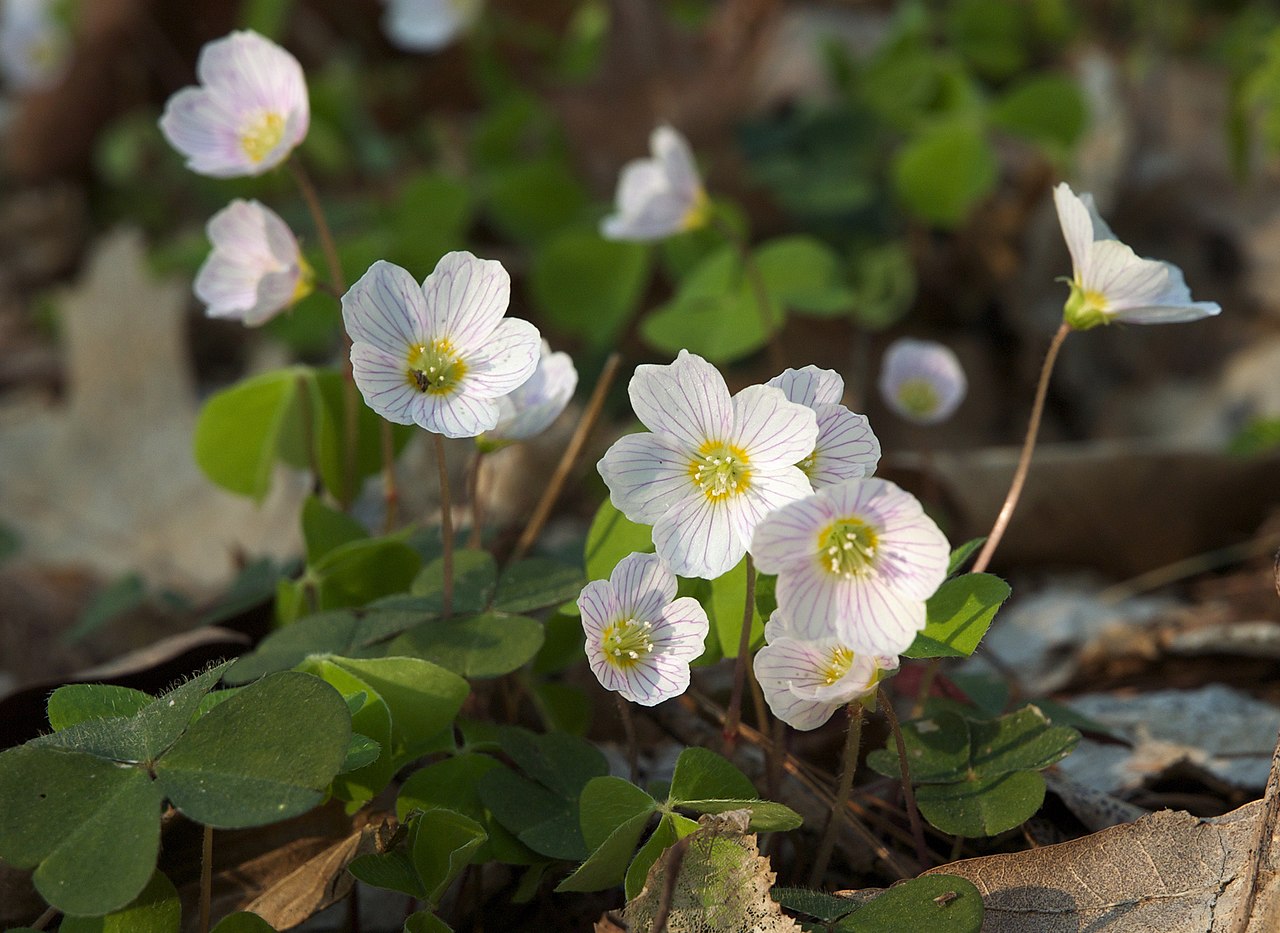 Oxalis acetosella
Wood Sorrel
Oxalis acetosella
Field Identification
- Small ground-cover plant, 2–4 inches tall
- Trifoliate leaves (three heart-shaped leaflets that fold downward at night or in rain)
- White flowers with pink or reddish veins (5 petals) — spring through midsummer
- Found in shaded, moist woodland — especially under beech and spruce
- Sour, lemony taste when chewed — unmistakable
How to Prepare
Eat raw in small quantities. The tart, citrusy flavor is refreshing and helps stimulate appetite.
- Trail nibble. Chew a few leaves as you walk for a burst of sour flavor. Historical records show the Kiowa people chewed wood sorrel to alleviate thirst on long journeys.
- Add to nettle soup. Tear leaves into boiled nettle broth for a lemony tang. Improves the flavor significantly and adds vitamin C.
- Tea. Steep a small handful of leaves in hot water for a mild, citrus-flavored tea. Pleasant and thirst-quenching.
- Salad base. Combine with other edible greens (sorrel, nettle shoots) for a mixed wild salad. Best eaten alongside cooked proteins if available.
Wood sorrel is a morale booster as much as a food — the sour taste is a welcome change from the monotony of survival eating.
Caution
Contains oxalic acid. Eat in moderation only — not as a primary food source. Large quantities on an empty stomach can cause nausea and may contribute to kidney stress over time. A few leaves per meal is the right amount. Do not confuse with Oxalis corniculata or O. stricta — those have yellow flowers; the Carpathian species has white flowers with pink veins.
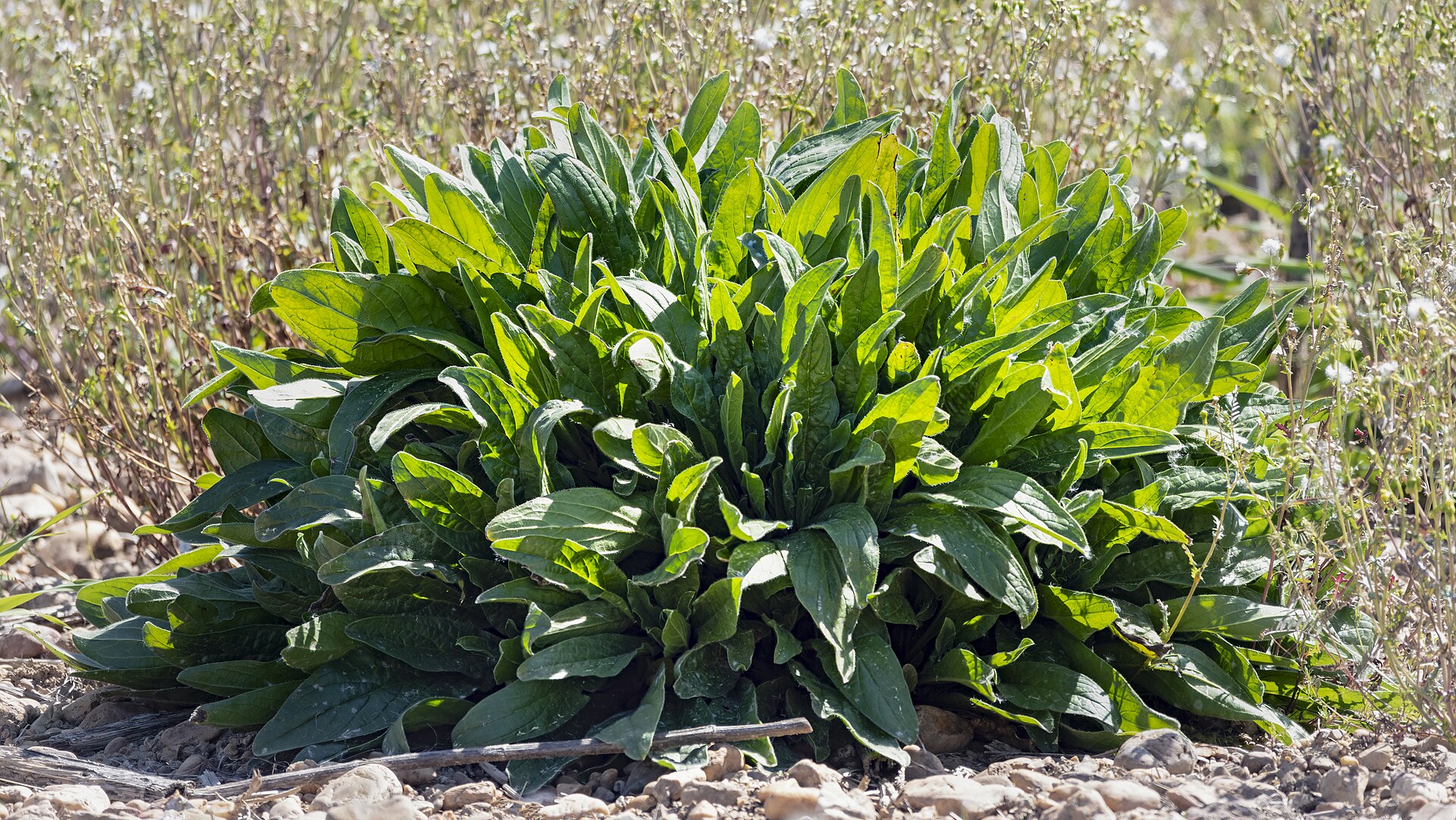 Rumex acetosa
Common Sorrel
Rumex acetosa
Field Identification
- Tall slender plant, 1–3 feet tall
- Key ID: Arrow-shaped leaves with two backward-pointing lobes at the base — like an arrowhead
- Reddish-green flower spikes that turn russet-brown as seeds develop
- Grows in meadows, stream margins, and grassy hillsides
- Tart, lemony taste — similar to wood sorrel but more robust
How to Prepare
One of the most versatile wild greens in the Carpathians. Edible raw or cooked.
- Sorrel soup. This is the classic preparation across all of Eastern Europe. Roughly chop a double handful of leaves and boil in water for 5–8 minutes. The result is a tangy, nutritious green soup. Add nettle for a more substantial meal.
- Raw in small amounts. Young tender leaves (light green, not yet leathery) can be eaten raw as a salad green. The tart flavor stimulates appetite.
- Wrap for fish. If you catch a fish, wrap it in large sorrel leaves before placing on coals. The acidity of the leaves helps break down the fish flesh and adds flavor — a technique used by Carpathian shepherds for centuries.
- Vitamin C source. In a survival context, sorrel is critically important for preventing vitamin C deficiency. Eat a few leaves daily.
Caution
Same oxalic acid caution as wood sorrel — eat in moderation, not as your sole food. Distinguish from dock (Rumex obtusifolius) which has rounder leaves without the backward-pointing basal lobes and is far more bitter. Dock is also edible but less palatable. Also distinguish from sheep sorrel (Rumex acetosella) which is much smaller and has narrower leaves — also edible but less useful due to tiny leaf size.
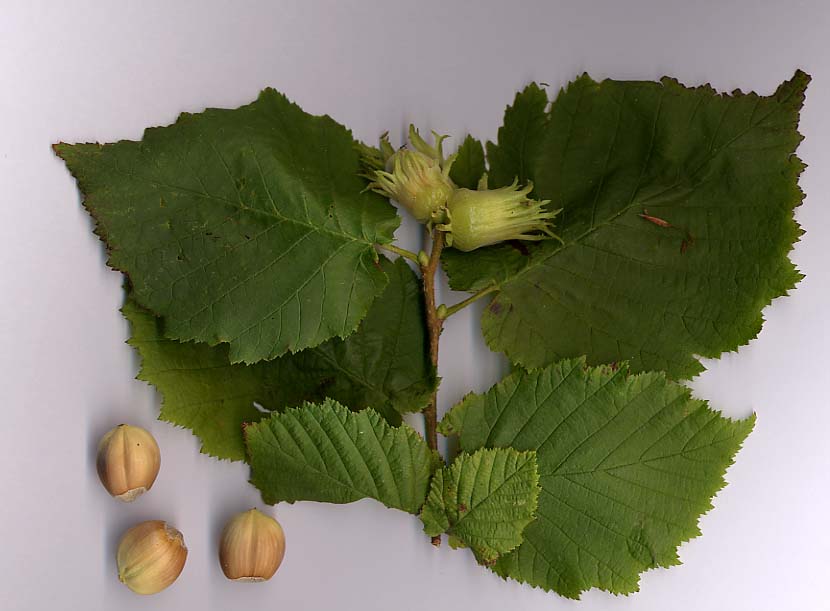 Corylus avellana
Hazelnut
Corylus avellana
Field Identification
- Multi-stemmed shrub or small tree, 10–20 feet tall
- Rounded, doubly-serrated leaves with a pointed tip, slightly hairy
- Nuts develop in clusters of 1–4, each enclosed in a leafy green husk (involucre) with ragged edges
- Common in forest understory, hedgerows, and woodland edges throughout the Carpathians
- Distinctive yellow catkins (pollen tassels) appear in early spring before leaves
How to Prepare
The highest-calorie wild food in this guide. A single handful of hazelnuts delivers more sustained energy than any other plant here.
- Check ripeness. Ripe hazelnuts (late August through September) have brown shells that separate easily from the husk. Green, unripe nuts are edible but less nutritious and harder to open.
- Crack and eat raw. Place nut on a flat rock and strike with another rock. Eat the kernel inside. No cooking needed.
- Roast for better flavor. Place shelled nuts on a flat rock near fire embers (not in flames) for 5–10 minutes, turning occasionally. Roasting improves flavor and makes the thin inner skin easier to rub off.
- Grind into paste. Crush roasted nuts between two rocks into a coarse paste. This is essentially primitive nut butter — extremely calorie-dense and easy to eat.
- Store for later. Unshelled hazelnuts keep for weeks if stored dry. Stockpile them. In a 21-day challenge, a cache of hazelnuts could be the difference between a strong finish and a tap-out.
Approx. 180 calories per ounce. That's 6× the calorie density of nettles. If you find a hazel tree, spend the time to collect as many as you can carry.
Caution
No dangerous lookalikes. Squirrels are your main competition — if you see a tree that's been heavily foraged by animals, the nuts may be wormy or hollow. Test by shaking: a good nut feels heavy and solid. A light, rattling nut is likely empty.
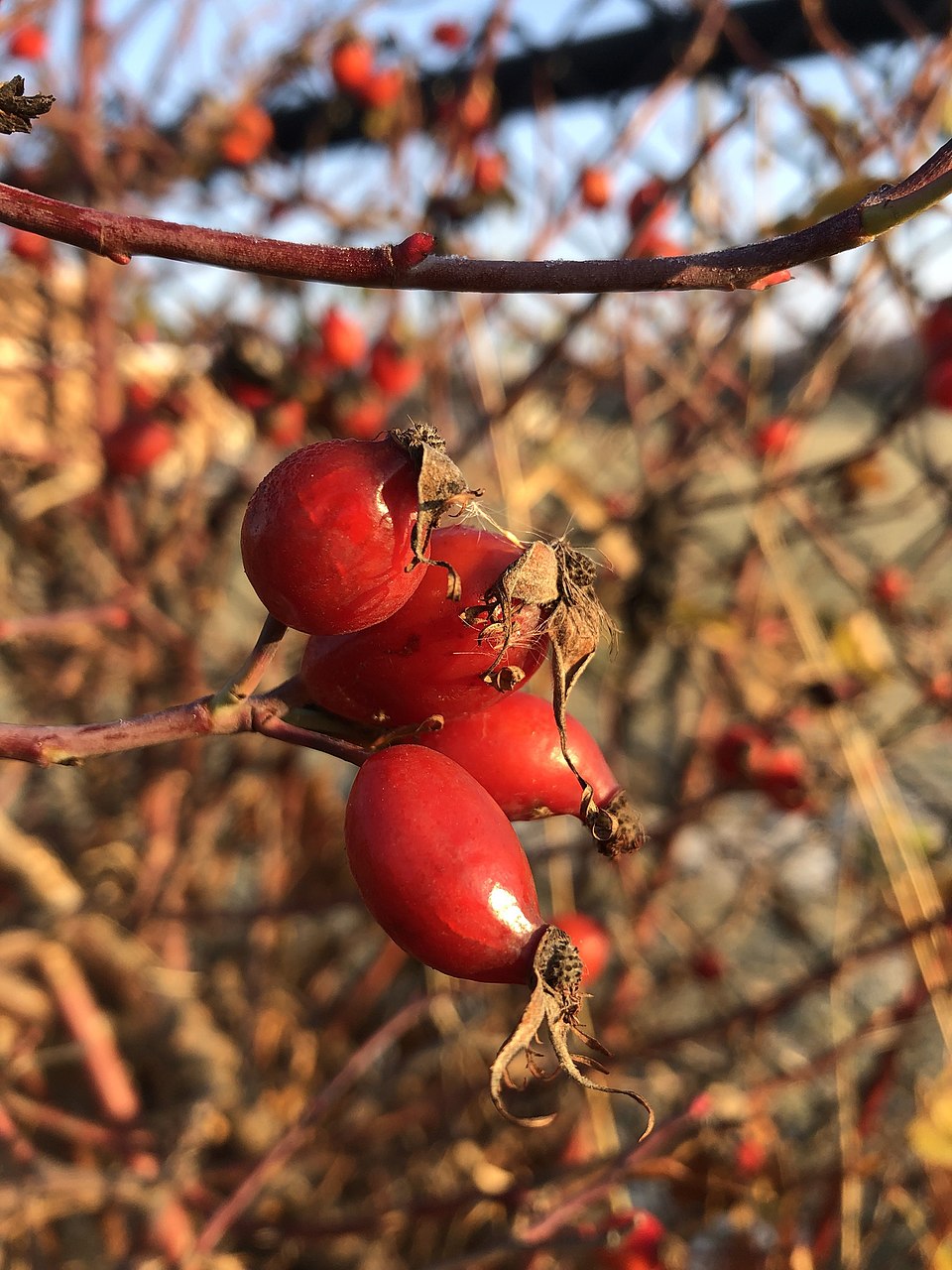 Fruit (hips)
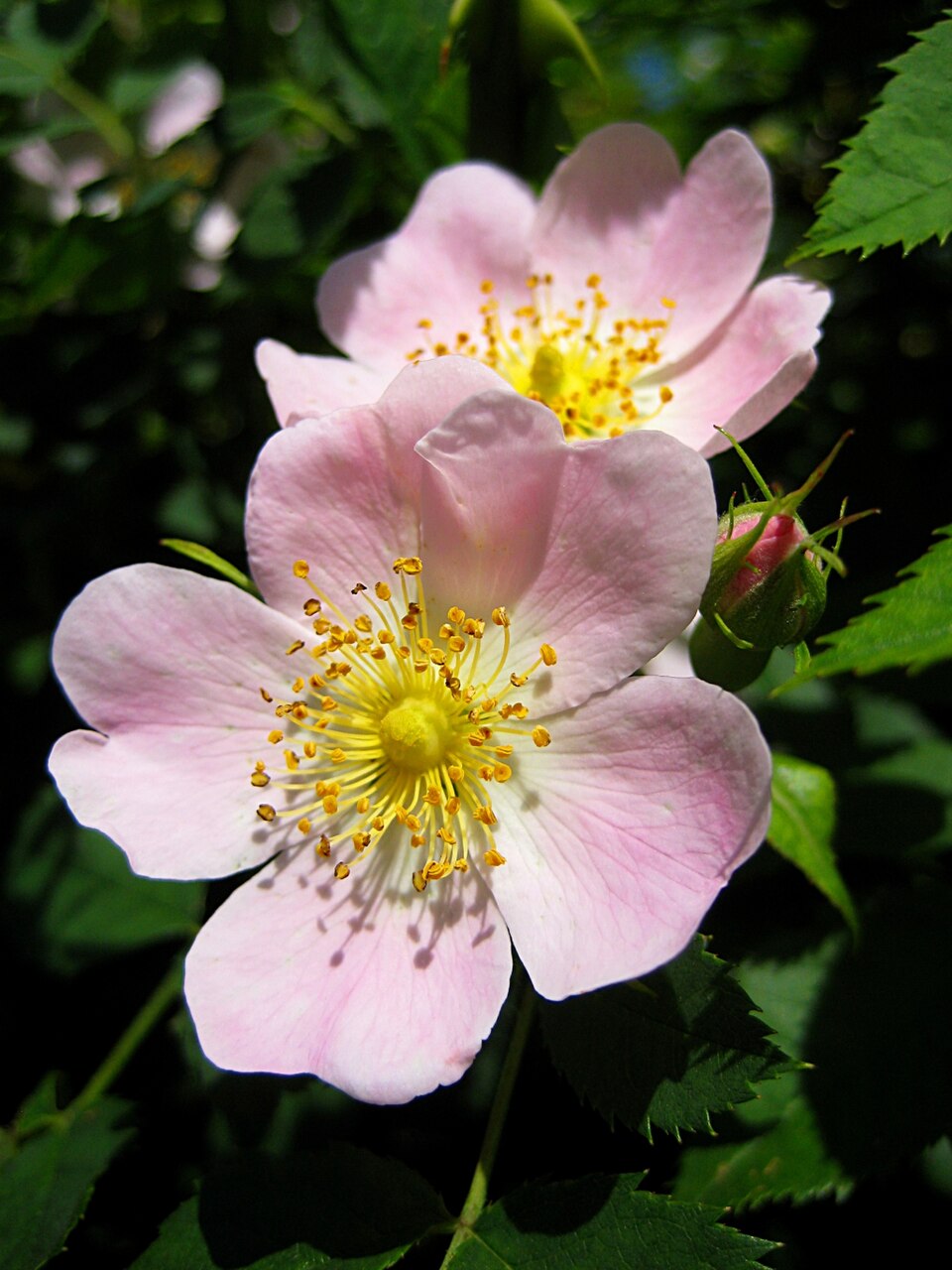 Flower
Rosehip
Rosa canina
Field Identification
- Thorny, arching shrub with pinnate leaves (5–7 leaflets per leaf)
- Pink to white five-petaled flowers in early summer
- Bright red-orange oval fruits (hips) develop by late summer and persist into winter
- Smooth, hairless hips (distinguishes Rosa canina from some other rose species)
- Hooked thorns on stems
- Found on forest edges, hedgerows, meadow margins throughout the Carpathians
How to Prepare
Contains 20× more vitamin C than oranges by weight. Critical for preventing scurvy in an extended survival situation.
- Rosehip tea (best method). Split 6–10 hips in half, scrape out the seeds and irritating hairs with a stick or fingernail, and steep in hot water for 15–20 minutes. The resulting tea is tart, slightly sweet, and packed with vitamin C. Drink daily.
- Eat the flesh raw. Split the hip, remove the seeds and the fine inner hairs (these are an irritant — do not swallow them), and eat the outer flesh. Sweet-tart, pleasant flavor.
- Mash into a paste. Process multiple cleaned hips into a pulp. Can be eaten straight or mixed with other mashed berries for a wild jam.
Critical: always remove the seeds and inner hairs. The hairs are covered in tiny barbs that cause intense itching and irritation of the mouth, throat, and digestive tract. Historically, these hairs were actually used as an itching powder.
Caution
All wild rose hips are edible — even if you're not certain it's Rosa canina specifically, any wild rose hip is safe to eat after removing seeds and hairs. The main risk is the internal hair irritant, not toxicity.
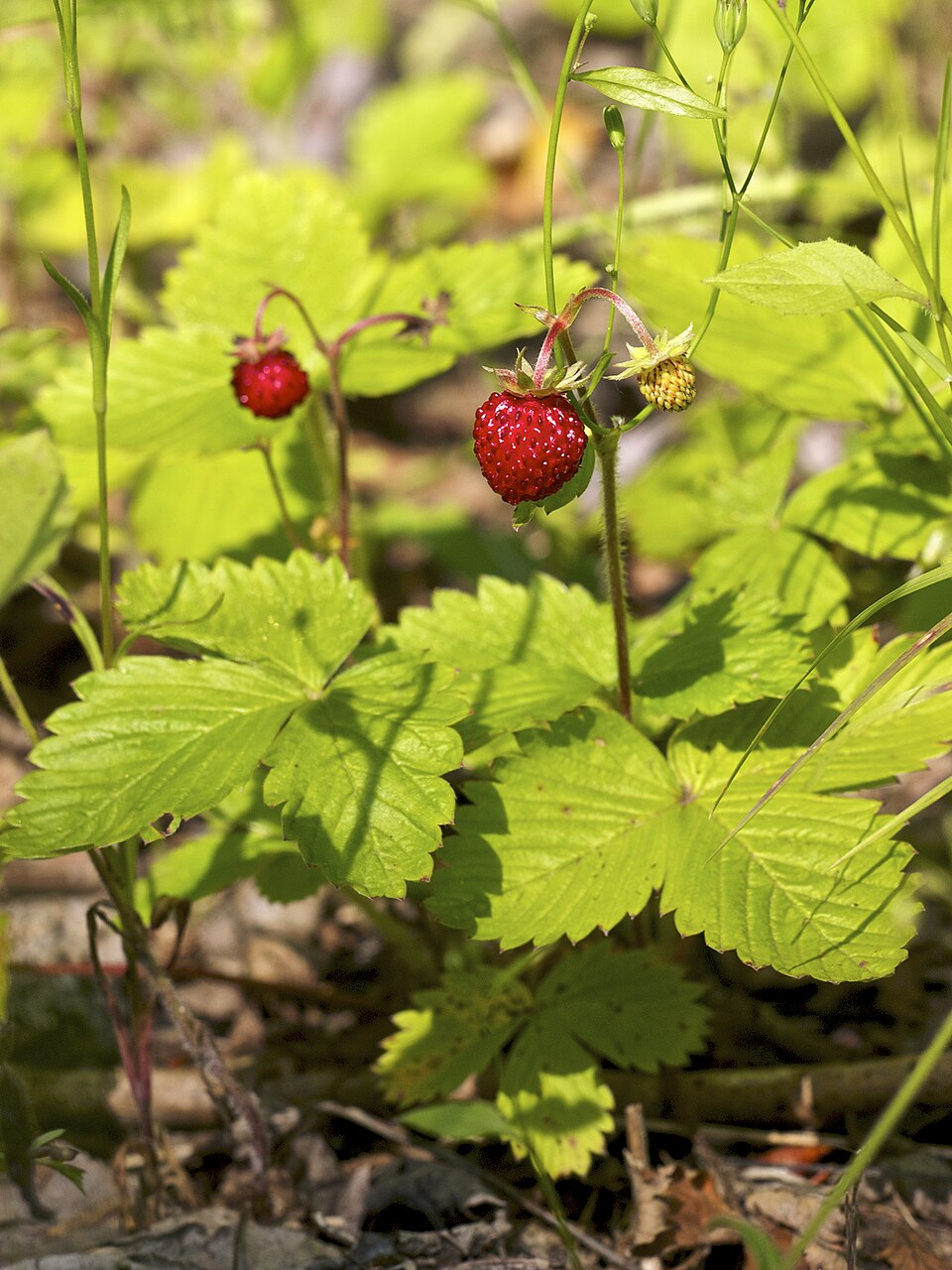 Fragaria vesca
Wild Strawberry
Fragaria vesca
Field Identification
- Low-growing plant, 4–8 inches tall, spreading by runners (stolons)
- Trifoliate toothed leaves with visible veins, silky hairs on leaf undersides
- Small white flowers with 5 petals and yellow center
- Tiny red fruit (pea-sized), intensely fragrant and flavored
- Seeds sit on the surface of the fruit (achenes)
- Found in forest clearings, meadow edges, sunny banks — often in large patches
How to Prepare
Eat fresh. These are nature's candy — no preparation required.
- Graze directly. Wild strawberries are small but incredibly flavorful — far more intense than any cultivated strawberry. Eat as you find them.
- Collect for a morale meal. Gathering enough for a handful takes patience (they're tiny), but as a morale-boosting treat during a 21-day challenge, few things compare. The name Fragaria vesca literally means "fragrant edible" — the Carpathian locals call them fragi de pădure.
- Leaf tea. Strawberry leaves make a mild, pleasant tea. Steep fresh or dried leaves in hot water for 5–10 minutes. Traditionally used across Eastern Europe as a digestive aid.
Caution
The main lookalike is mock strawberry (Duchesnea indica), which has yellow flowers instead of white and produces tasteless, upward-pointing fruit. It's not toxic — just a waste of time. If the flower is white and the fruit droops downward on its stem, you've got the real thing.